
Most men picture the duffle coat on a British schoolboy, or on Paddington Bear stepping off the train with a label round his neck. That reputation is unfair. The coat was designed for sailors who had to fasten it with wet gloves on an icy North Sea deck, and every detail still follows that logic. The common mistake is not wearing one, it is buying it too big: a duffle that hangs off the shoulders turns any grown man into a sixth former. Learn how to wear a duffle coat at the right size and it covers three months of winter, from raw denim to flannel trousers.
The short version:
- Buy it snug at the shoulders over a thick sweater, never two sizes up.
- The cloth should be dense and heavy: at least 70% wool.
- Navy or camel first, bottle green later.
- It loves textured fabrics: corduroy, flannel, chunky knits, suede.
- Over a suit only if it covers the whole jacket.
From the fishermen of Duffel to the Royal Navy
The name comes from Duffel, a small town south of Antwerp in Belgium that wove a thick, coarse woollen cloth called duffel. In the 19th century, English outfitters turned it into a hooded three-quarter-length coat, and the Royal Navy ordered it in large numbers towards the end of the century for men on watch. During the Second World War, Field Marshal Montgomery wore one at the front, and the coat picked up the nickname "Monty".
After 1945, military surplus flooded the market. A small London firm, Gloverall, bought up the stock and in the early 1950s began making its own civilian version: finer wool, a smaller hood, horn toggles. That design, still made in England by this historic house with remarkable craftsmanship, is the template almost every duffle coat on sale today follows. Left Bank students, architects, London mods: within twenty years the sailor's coat had become a city coat.
The details that make a duffle coat
Four features set it apart from any other hooded coat. Each one has a job.
- Toggles: wooden or horn pegs that pass through loops of rope or leather. You can fasten them one-handed with thick gloves on. Most coats have three or four.
- The hood: oversized, originally to fit over a naval cap. Most of the time it stays down.
- Patch pockets: large, flapped and sewn on the outside, big enough for gloves and a beanie.
- The throat tab: a strap that buttons under the chin to close the collar in a strong wind.
On a traditional model the shoulder yoke is doubled and the cloth is often double-faced, with a check on the reverse (which is why tartan shows inside the hood). Double-faced wool needs no lining and is warmer, but also heavier on the shoulders.
What fit and length should you choose?
The original cut is wide and boxy, made to go over a uniform. Today it is worn closer to the body.
Length. The classic duffle falls to mid thigh or just above the knee. It is the warmest version and the one that covers a jacket. Shorter models that stop just below the seat look younger and suit men under 5'9". Above 6'1", mid thigh balances the frame.
Shoulders. The seam should sit on the shoulder bone with a heavy sweater underneath. A duffle that droops past it gives you the cape effect this coat is often blamed for. Slim men should try the size down.
Chest. Fastened, you should be able to slide a flat hand between sweater and cloth. The toggles should not strain their loops. If a loop pulls flat and horizontal, the coat is too small.
Some makers now offer a slimmer cut, sometimes with a zip hidden behind the toggles. It is practical day to day and a good compromise if the original shape feels too roomy.
Wool, weight, lining: which cloth for which winter?
The cloth makes the coat. Good milled wool is matte, thick, almost stiff when new, and blocks the wind. English makers often quote their cloth at around 800 grams per metre, which gives a coat that holds its shape on its own. Below 70% wool, the fabric pills at the cuffs and pockets in its first winter.
| Composition | Warmth | Lifespan | Rough price |
|---|---|---|---|
| 100% wool, double-faced | Very high | 10 years and more | $450 to $1,000 |
| 80% wool, 20% nylon | High | Long, resists abrasion | $280 to $500 |
| 50 to 70% wool | Medium | Fair, pills where it rubs | $130 to $280 |
| Under 50% wool | Low | Short | Under $130 |
Lining matters too. Double-faced cloth goes unlined: the most authentic and most breathable option. A satin or viscose lining makes it easier to slip on over a thick knit. Quilted linings add warmth but bulk up a coat that is already generous. We advise against them unless you live somewhere with long, bitter winters and walk a lot.
Navy, camel, green: which colour?
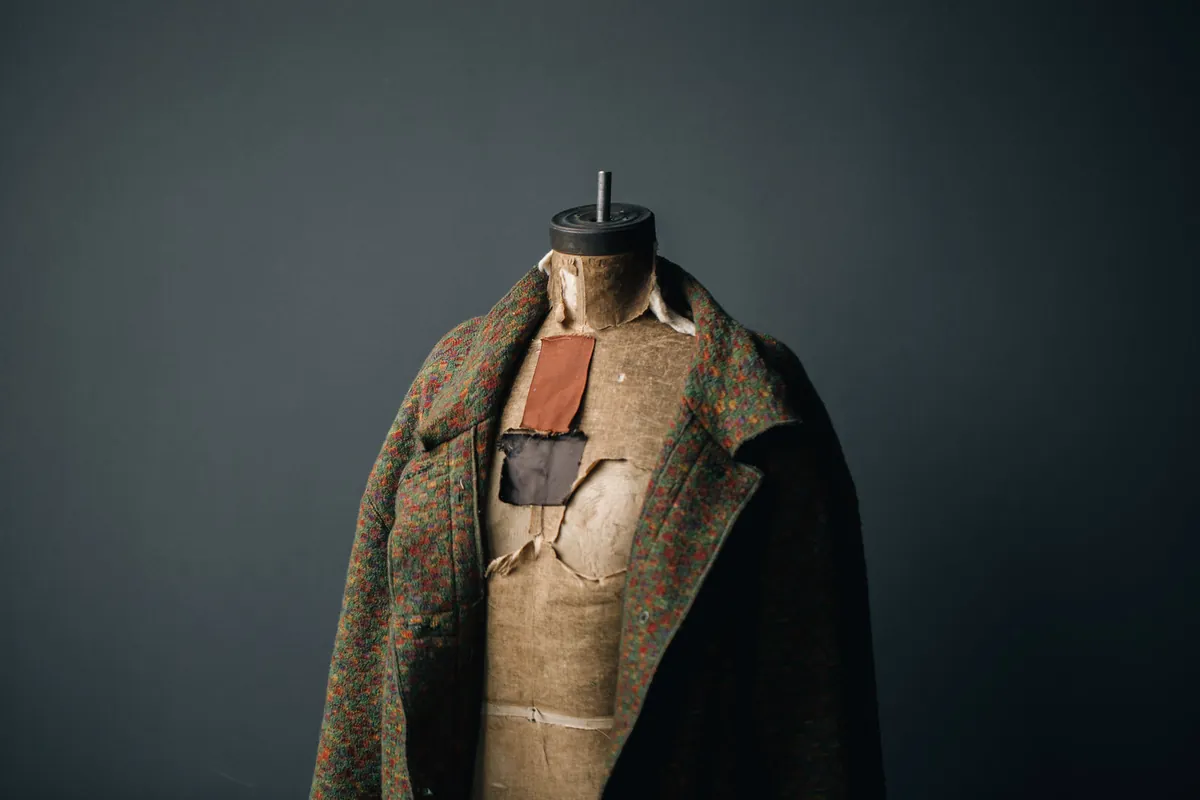
Navy first. It works with jeans, khaki chinos, grey trousers and nearly every knit, and nods to the coat's naval past. Camel is a close second: the colour of the original duffel cloth, the warmest of the lot, and superb with greys and browns. Bottle green and charcoal make very good second coats.
Black? Resist. It swallows the toggles, makes the coat severe and shows every speck of dust. Check versions are best left to men whose wardrobe is already very plain. To build combinations around these shades, our guide on how to match colours in an outfit covers the pairings that work.
How to wear a duffle coat: five outfits
The duffle coat is a rugged garment. It gets on better with fabrics that have texture (corduroy, tweed, chunky knits, suede) than with smooth, shiny cloth. Start there and most outfits build themselves.
Weekends, with raw denim
Navy duffle, grey marl lambswool sweater, cuffed raw denim, brown suede chukkas or desert boots. The most natural outfit of all. Keep the jeans dark and straight: a light wash or a very skinny leg throws off the volume of the coat.
In town, over a turtleneck
Cream or chocolate roll neck, grey flannel trousers, pebble-grain derbies. The roll neck fills the neckline and replaces the scarf. It is our favourite outfit for a December dinner in town. Our turtleneck guide explains which knit weights slide under a heavy coat.
With corduroy, for a campus look
Light blue oxford shirt, button cardigan, beige or olive corduroy pants, loafers. A camel duffle finishes it. This is Ivy League territory, where the coat settled into civilian life in the 1960s.
At the office, over a blazer
A duffle goes over a jacket on two conditions: it must cover the whole hem of the jacket and leave room in the shoulders. A tweed or flannel blazer, a white shirt and charcoal chinos make a relaxed office outfit that matches the heavy wool of the coat.
Over a suit, with care
It can work with a long duffle and a flannel or tweed suit. Over a dark suit in fine worsted, the contrast in fabrics is too strong, and a straight overcoat is the better call. To compare other winter coats, our roundup of men's coat brands gives an overview of the cuts available.
Mistakes to avoid
- Sizing up twice "for layering". The duffle is already cut wide.
- Half fastening it. Closed, every toggle; open, none. One toggle done up in the middle makes the fronts sag.
- Wearing the hood up for show. It is for drizzle, not an accessory.
- Pairing it with chunky technical running shoes: the clash of styles muddles the outfit. Clean leather white sneakers work far better.
- Adding a bulky scarf to a coat with a throat tab. A thin scarf tucked flat is enough.
Duffle coat, peacoat or parka: which for which weather?
The duffle coat is the coat for dry, cold days, roughly 32 to 50°F. It is warmer than a peacoat, being longer and usually cut from thicker cloth, but less formal. In steady rain the wool eventually soaks through, even if it shrugs off a shower. For wet, deep cold, a technical parka takes over.
Budget, care and lifespan
Expect to pay $130 to $280 for a decent wool-blend duffle coat, $330 to $500 for an English-made pure wool model, and over $700 for the heritage houses still producing in England. The vintage market is rich: 1970s and 1980s duffles in heavy cloth turn up in thrift stores for a fraction of that. Check the rope loops and elbows before you buy.
Care is simple. Brush the coat once dry with a horsehair brush, hang it on a wide, curved hanger and have it dry cleaned once a season, at the end of winter. Before storing it, a cotton garment bag and a cedar block are enough to keep moths away. A worn rope loop can be replaced by any alterations tailor for a few dollars.
Our last piece of advice: try it on over your thickest sweater, take the smallest size that closes without strain, and choose navy. A duffle coat needs nothing more.