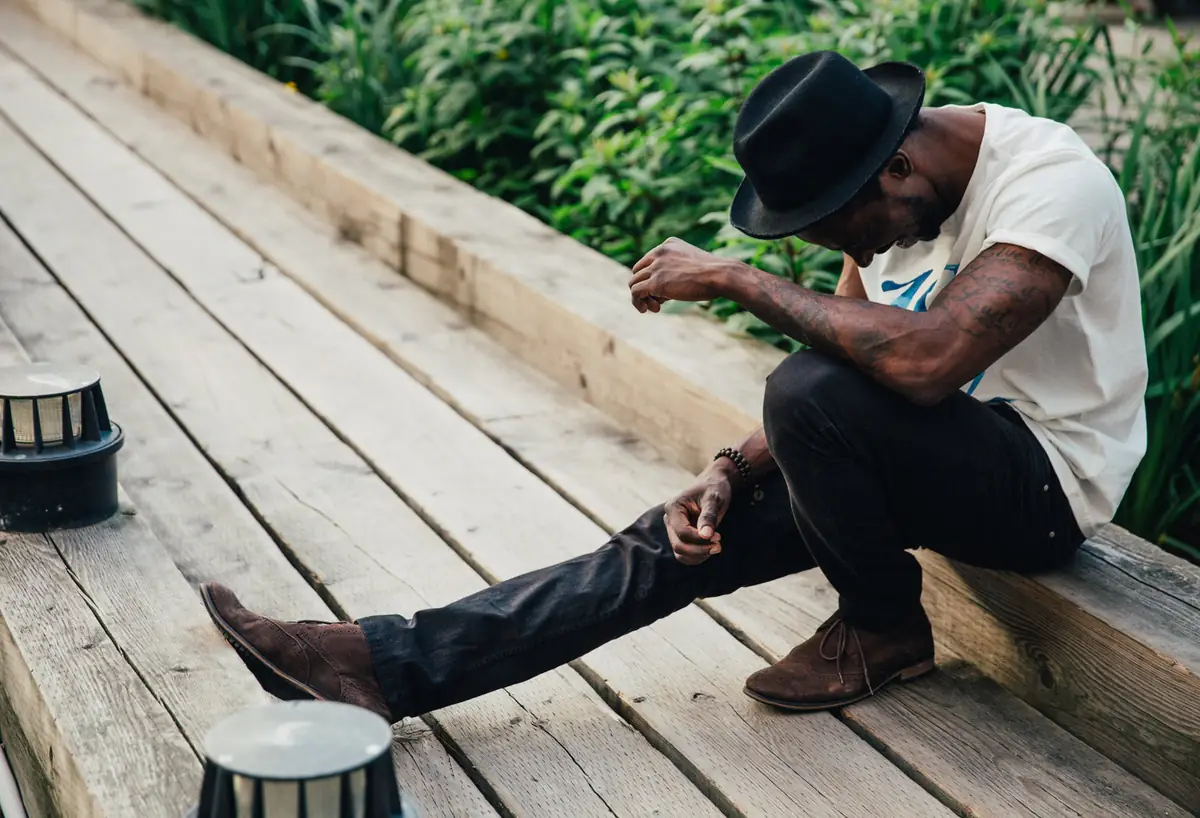
Corduroy pants for men spent decades stuck with a tweedy, elbow-patch reputation. That is unfair, and it is out of date: the right pair is the warmest, friendliest trouser in a winter wardrobe, softer than denim and less stiff than flannel. The real trap is elsewhere. Most men buy on colour alone, never look at the wale, and end up with hunting trousers when they wanted something for the office. So this guide starts with the fabric, then moves on to fit, colour and outfits.
The short version:
- Wale size sets the dress code: fine for smart, wide for weekends.
- A straight or slightly tapered leg with little or no break.
- Start with tobacco brown or ecru, not black.
- Look for heavy cotton with 2% elastane at most.
- Wash inside out, cold or 30°C, and never tumble dry.
Corduroy, pinwale, velvet: what is the difference?
Corduroy is a pile fabric: extra yarns are woven in loops, then cut, which gives that soft surface that catches the light. On corduroy, the pile runs in vertical ridges, the wales, separated by narrow channels. The French long called it "manchester", after the English mill town that turned it into an industry in the nineteenth century. The popular story that "corduroy" comes from corde du roi, the king's cloth, is closer to legend than to history, but it gave a workwear fabric a rather royal aura.
Pinwale (or needlecord) is corduroy with very fine wales, almost smooth from a distance. Velvet, with no wales at all, is a different animal: shinier, dressier, mostly seen on dinner jackets. Here we stick to corduroy, the kind you wear every day.
Which wale should you pick for corduroy pants?
Wales are counted per inch. It is the most overlooked choice in the whole purchase, and it changes the silhouette completely.
| Corduroy type | Wales per inch (approx.) | Look | Wear it for |
|---|---|---|---|
| Pinwale | 16 to 21 | Nearly smooth, fine, discreet | Office, under a blazer, spring and autumn |
| Fine wale | 11 to 15 | Visible but tidy texture | The most versatile, Monday to Sunday |
| Medium wale | 8 to 10 | Pronounced ridges, very warm | Weekends, city, countryside |
| Wide or jumbo wale | 3 to 7 | Retro, 1970s feel | Relaxed looks, deep winter |
Our advice for a first pair: fine wale, around 11 to 14 wales per inch. It sits under a blazer without looking like a lumberjack and still has enough texture to make a plain sweater feel warmer. Wide wale is great, but it bulks up the leg: on a heavier or shorter frame, it adds volume exactly where you do not want it.
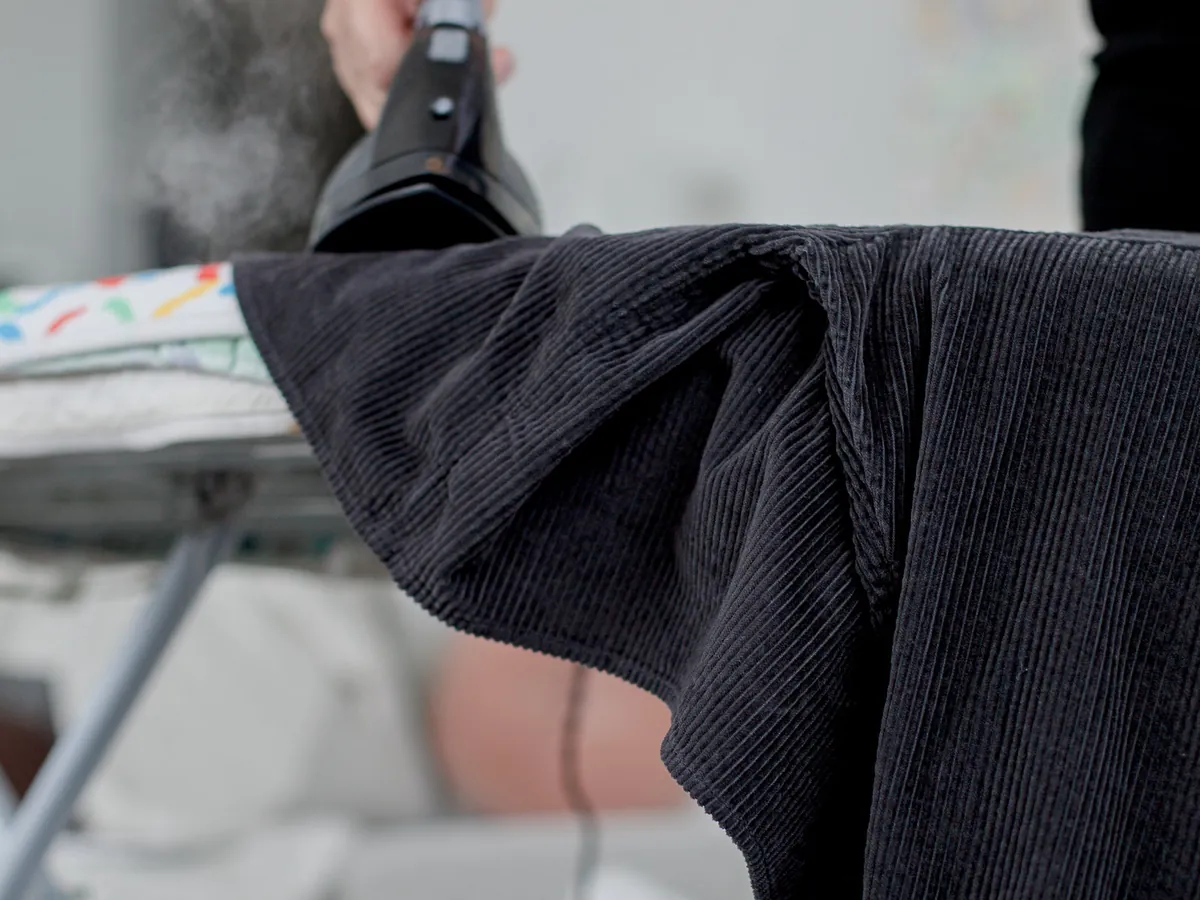
Weight matters too. A good winter corduroy usually sits somewhere around 300 to 400 g/m² (roughly 9 to 12 oz per square yard) when the brand lists it. Lighter than that, the knees bag quickly. In the hand, use a simple rule: if the cloth crumples like a shirt, it will not last the winter.
Which fit and length work best?
A straight or slightly tapered leg ages best. Corduroy is thick and has body: in a skinny cut, it hugs the thigh and the wales distort at the stress points, which looks tired within weeks. The wide, pleated trouser that keeps showing up in recent collections, on the other hand, works very well in wide wale with a chunky knit on top. You just have to own the look.
For length, go for a slight break on the shoe, or none at all. A hem that is too long stacks thick fabric around the ankle, and corduroy makes that stacking very visible. With boots, a hem that hits the tongue keeps the fabric from bunching on the shaft.
Look at the rise as well: a mid or high rise, just above the hips, gives a cleaner line than a low one. Pure cotton also relaxes a little with wear, so if you are between two sizes in the fitting room, take the snugger one.
What colours should corduroy pants come in?
Corduroy loves warm, earthy shades, the colours of autumn. The pile catches light and adds a depth that flat cotton never has: a colour that looks dull on chinos turns rich on cord.
- Tobacco, chocolate or cognac brown: the classic corduroy colour and the easiest to wear. It pairs with navy, off-white, green and grey.
- Ecru, cream or stone: bright in winter, excellent with a navy or burgundy sweater. It shows dirt, of course.
- Olive or bottle green: maybe the most elegant option. It works with camel, brown and heather grey.
- Navy: the safest version, close to a wool trouser, ideal at work.
- Burgundy, mustard, rust: second or third pair colours that need a neutral top.
Skip black. Black corduroy loses everything that makes the fabric worth wearing, its relief and its sheen, and it picks up every speck of lint. To build combinations without second-guessing, our guide on how to match colours in an outfit applies perfectly here: a textured piece likes neighbouring colours, not harsh contrast.
How to wear corduroy pants for men day to day
Corduroy is a texture, so the golden rule is a texture rule: one textured piece per outfit, surrounded by smoother or flatter fabrics. Three settings cover most of the winter. Your coat is the exception: knowing how to wear a duffle coat in heavy wool pays off, because it sits beautifully over corduroy.
At the office: fine cord and a blazer
Pinwale or fine wale in navy, grey or brown, a light blue oxford shirt, a plain wool blazer and brown leather derbies. It is the warmest alternative to suit trousers and remains entirely professional. One thing to watch: avoid a heavy tweed jacket over strongly ridged cord, as two loud textures fight each other.
Weekends: knitwear and comfort
Medium wale in brown or ecru, a crew neck wool sweater or a merino turtleneck, suede boots. This is the outfit that gives the most style for the least effort. When it gets cold, a peacoat or a straight wool overcoat finishes the look. For a softer version, a chunky cardigan over a white tee works very well.
Evenings: dark cord and a roll neck
Fine wale in bottle green or deep burgundy, a black or navy roll neck, a dark wool jacket, leather loafers. Under dim lighting, the sheen of the pile does the job of a dressy fabric without the stiffness of a suit.
What about head-to-toe corduroy?
A corduroy jacket and corduroy pants can work, but not in the same colour or the same wale unless they were sold as a suit. A fine brown cord jacket over grey wool trousers is easier. The reverse works too: cord pants, wool jacket. Two mismatched cords that are almost identical look like a suit that lost its other half.
Which shoes go with corduroy pants?
Corduroy calls for shoes with some character, in leather or suede.
- Suede chelsea boots or lace-up boots: the most natural pairing, especially with medium wale.
- Brown leather derbies and brogues: for finer cords at work.
- Loafers: smooth leather in the evening, with plain socks matching the trousers or one shade darker.
- Leather or suede sneakers, clean and simple, for a weekend in town.
We advise against technical trainers and running shoes, which clash with the fabric. The same goes for very shiny black shoes, which pull the outfit toward a formality corduroy does not share.
How much should you spend on corduroy pants?
Prices stay reasonable next to wool trousers. As a rough guide, expect $50 to $80 at the entry level, $90 to $170 for heavy, well-cut cord from a careful ready-to-wear label, and more than that from makers working with renowned English or Italian mills. Their wales are denser, the cloth heavier, and the difference shows mostly after two winters.
Check the label before the price tag. 98 to 100% cotton ages well. A touch of elastane (1 to 2%) adds comfort to slimmer cuts. Beyond that, or with a big share of polyester, the cord gets shiny sooner and the wales flatten at the knees. If you are torn between cord and chinos for a first winter trouser, pick the cord: chinos work all year, while nothing replaces corduroy between November and February.
Care: keeping the wales upright
Corduroy is tough, as long as you respect the pile.
- Wash inside out, cold or 30°C, on a gentle cycle, with similar colours. The pile grabs lint from towels.
- No tumble dryer: dry flat or hang by the hem so the weight of the water does not leave a crease.
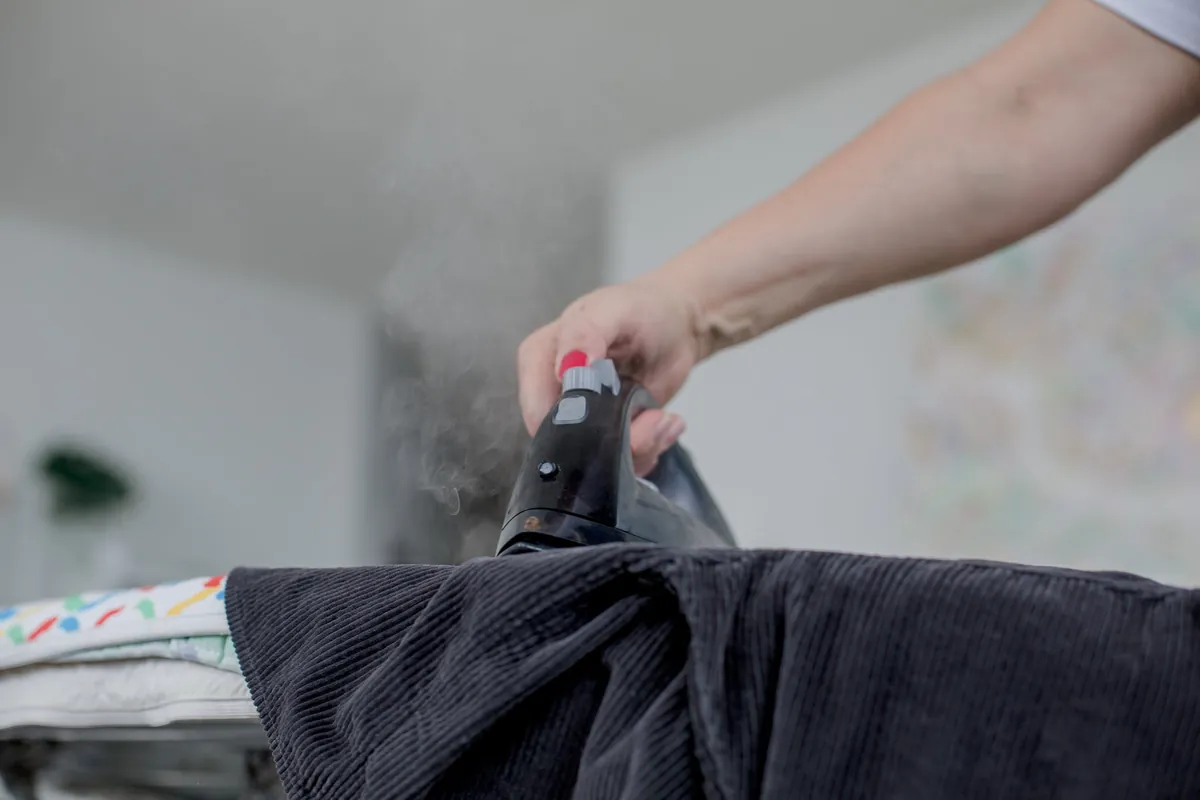
- Iron on the reverse, with a pressing cloth or steam without pressing down. On the right side, the iron crushes the wales and leaves shiny marks.
- A quick pass with a soft brush, in the direction of the pile, lifts the wales after wear.
- Hang them by the hem or fold them in half, never crushed at the bottom of a pile.
Giving the pants a day or two off between wears is often enough to make knee marks disappear.
Final word
If you buy only one pair of corduroy pants for men this winter, make it fine wale, tobacco brown or olive, straight leg. It will go with your knits as well as your blazer, and your jeans will spend more time in the drawer than you expect.