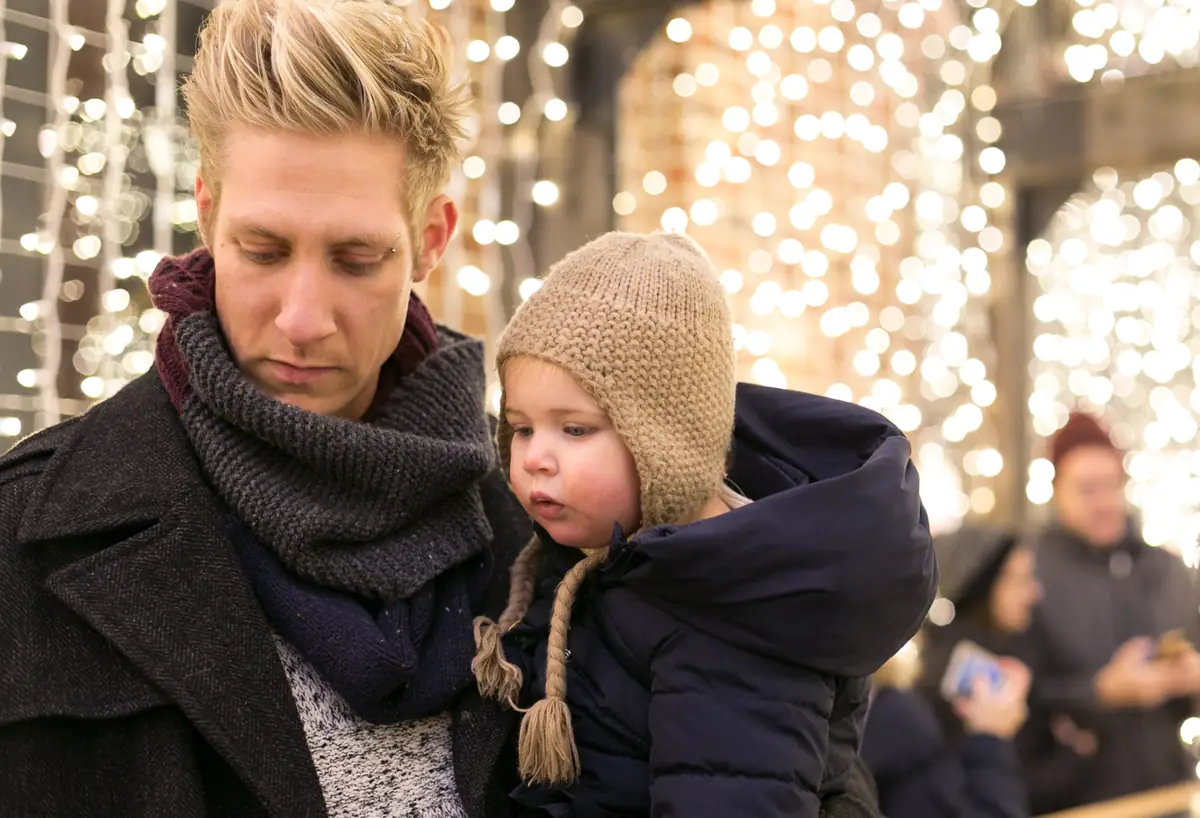
Late October on a station platform, the same picture repeats itself: decent wool overcoats, and around the neck a men's scarf that is too short, in acrylic that was already pilling last winter. Yet it's the accessory you wear most often, five months a year, six inches from your face. It deserves better than an impulse buy at the till. The good news is that the rules fit on an index card.
What to keep in mind before you buy:
- Natural fibre first: lambswool, merino, cashmere or alpaca, never pure acrylic.
- Around 180 cm (70 inches) long and 25 to 35 cm wide, or no decent knot is possible.
- A colour that differs from your coat without fighting it.
- A good first scarf costs roughly $70 to $170 (about €60 to €150).
- Finishing matters as much as fibre: clean fringes, straight edges, a dense knit.
Which material makes the best men's scarf?
Material decides the warmth, the feel against the back of your neck and how the scarf looks after three winters. A finer fibre (measured in microns, the diameter of the hair) itches less. Cashmere sits around 15 to 16 microns, fine merino between 17 and 21, lambswool slightly above. Below roughly 22 microns, most men stop feeling any prickle at all.
| Material | Feel | Warmth | Typical price | Best for |
|---|---|---|---|---|
| Lambswool | Soft, slightly rustic | High | €40 to €90 | A solid first buy |
| Fine merino wool | Smooth, no itch | Medium to high | €50 to €120 | City wear, autumn, sensitive skin |
| Cashmere | Very soft, light | Very high | €120 to €350 | Dress coats, dry cold |
| Alpaca or baby alpaca | Soft, slightly hairy | Very high | €70 to €180 | Harsh winters, lanolin allergies |
| Cotton or modal | Cool, fluid | Low | €25 to €70 | Spring and early autumn |
| Silk or silk-wool blend | Smooth, with a sheen | Low | €60 to €200 | An evening coat collar |
| Acrylic | Soft in store, pills fast | Medium | €10 to €30 | Skip it |
Our advice for a first scarf: lambswool or merino. Cashmere is seductive in the shop, but a €60 cashmere scarf is almost always a low-percentage blend or a short fibre that fluffs up by December. Read the composition label, then scrunch the scarf in your fist for ten seconds: good wool springs back without a hard crease. The same logic applies to knitwear in general, and our guide to wearing a turtleneck covers the yarns that hold up.
Alpaca deserves its own line. Its fibre is partly hollow, so it insulates very well for its weight, and it contains no lanolin, the wool grease that irritates some skin. If you wait for a bus at minus five Celsius (around 23°F), it's often the best warmth for the money.
Length and width: the two numbers to check
Most high-street scarves measure 150 to 160 cm. That's too short. Folded in half for a Parisian knot, a 160 cm scarf leaves ends of eight inches that ride up with every step.
Aim for 180 cm, fringes included, and up to 200 cm if you're over 6'1" or like knots that wrap twice. For width, 25 to 35 cm. Narrower, and the scarf vanishes under the collar like a winter tie; wider, and it bunches into a roll under your chin that shortens the neck.
One point on build: men with narrow shoulders look better in a fine, flat knit that adds no bulk. Broader frames carry a chunky rib or a cable knit more easily.
Which colour and pattern?
The most common mistake is buying a scarf in exactly the same colour as the coat. Navy on navy, black on black: the upper body becomes one block and the face loses its frame. The scarf should sit one or two shades away.
Three starting colours cover almost every wardrobe:
- Heather grey, which works with navy, camel, black and olive.
- Burgundy, which warms up a grey or navy coat and flatters fair skin.
- Bottle green or tobacco brown, for camel and beige coats and tweed jackets.
Black is possible, but on its own next to the face it hardens your features. We keep it for a second purchase, for a light grey coat or an evening outfit. If you're torn between two shades, go back to the principles in our guide on how to match colours in an outfit: one strong colour per look, not two.
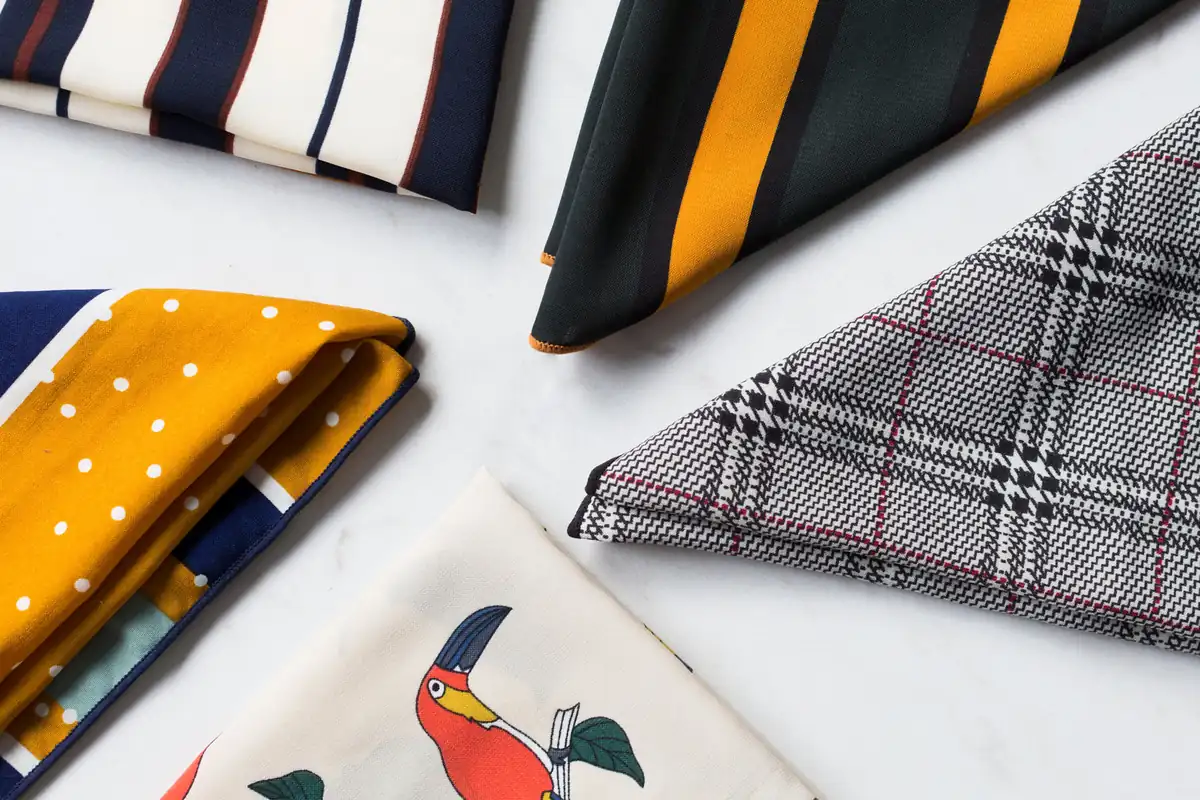
On patterns, tartan and houndstooth pair well with a plain coat. With a herringbone or checked coat, choose a plain scarf. Skip large woven logos: they date a scarf within two seasons.
Matching your scarf to your coat
Pick the scarf for the collar it's going to live in. A wide, high collar calls for a finer knit; a flat collar or a collarless jacket can take a thick scarf.
With an overcoat or a peacoat
A wool overcoat is the natural home of a cashmere or merino scarf, tied in a Parisian knot or simply draped. On a peacoat with a tall collar, go for a 25 cm width, or the double-breasted front and the scarf will fight under your chin.
With a duffle coat or a parka
Rougher outerwear handles chunky knits, wide ribs and bolder colours. A camel duffle coat with a heavy heather grey or brick red scarf works very well, and our guide to wearing a duffle coat goes through the colour pairings. On a technical parka, a boiled wool or alpaca scarf keeps things warm-looking without feeling like a costume.
With a trench coat or a light jacket
In October or April, a light scarf in cotton, modal or a silk-wool blend is enough. Wear it open, in a single wrap, with a beige or khaki trench coat without weighing down the outline.
With a suit
Over a coat worn on top of a suit, keep it quiet: cashmere or fine merino, a solid colour, perhaps a discreet herringbone. Let the scarf lie flat with parallel ends, or tie it very loosely so the shirt collar doesn't crumple.
How to tie a scarf: three knots are enough
You need three knots for the whole winter.
- The Parisian knot: fold the scarf in half, lay it around the back of your neck, pull both ends through the loop. It's warm, stays flat under a collar and needs at least 170 cm of scarf. This is the one we recommend for everyday wear.
- The once-around: one loop around the neck, one end in front, one behind. Casual, very good against wind, ideal with a parka or a wool jacket.
- The drape: the scarf laid over the shoulders with no knot, ends parallel. For mild days and dressier outfits, under an open coat.
Skip the elaborate knots from video tutorials, with triple loops or braids. They take three minutes in the morning and come undone on the train.
Signs of a cheap scarf
Some giveaways show before you even touch the fibre. Uneven or matted fringes. A knit that lets light through when you stretch it in front of a lamp. A label reading "30% wool", with acrylic making up the rest. A scarf that crackles with static when rubbed against a sweater.
A well-made men's scarf also has some weight to it: around 150 to 250 grams (5 to 9 oz) for a winter wool, barely 100 grams for a fine cashmere, which makes up for it with fibre density. A very light, very cheap scarf is rarely warm.
Care: how to keep it for ten winters
A wool scarf rarely needs washing: two or three times a season is plenty, since it doesn't sit against your torso. Air it over a chair back after each wear. To wash, use cold water or 30°C at most, a gentle wool detergent, no spin, and dry flat on a towel. Cashmere prefers hand washing to the machine.
Pilling shows up mostly where the scarf rubs against the coat collar. A fabric shaver clears it in two minutes. In spring, store your scarves clean and folded in a box with a lavender sachet or a cedar block. A scarf put away dirty attracts moths, whose larvae favour soiled fibres.
A well-chosen men's scarf lasts a decade, and the rest of your men's accessories work the same way: few pieces, carefully chosen, looked after. If you buy only one scarf this winter, make it heather grey lambswool, 180 cm long, and wear one out before you move up to cashmere.